
OS 29: The problem with longevity science
All the wellness demonic or otherwise news that's fit to print
Tag cloud: Damon Odyssey workout, daily workouts, an S-tier facial map, esoteric trad protein-only seasoning/sauce, the NAD+ apocalypse; a huge acquisition in the fitness tracker space, SoHo House’s gym push, Nike’s new recovery slide and the Soviet crossover, a calisthenics-I_D mag linkup and more.
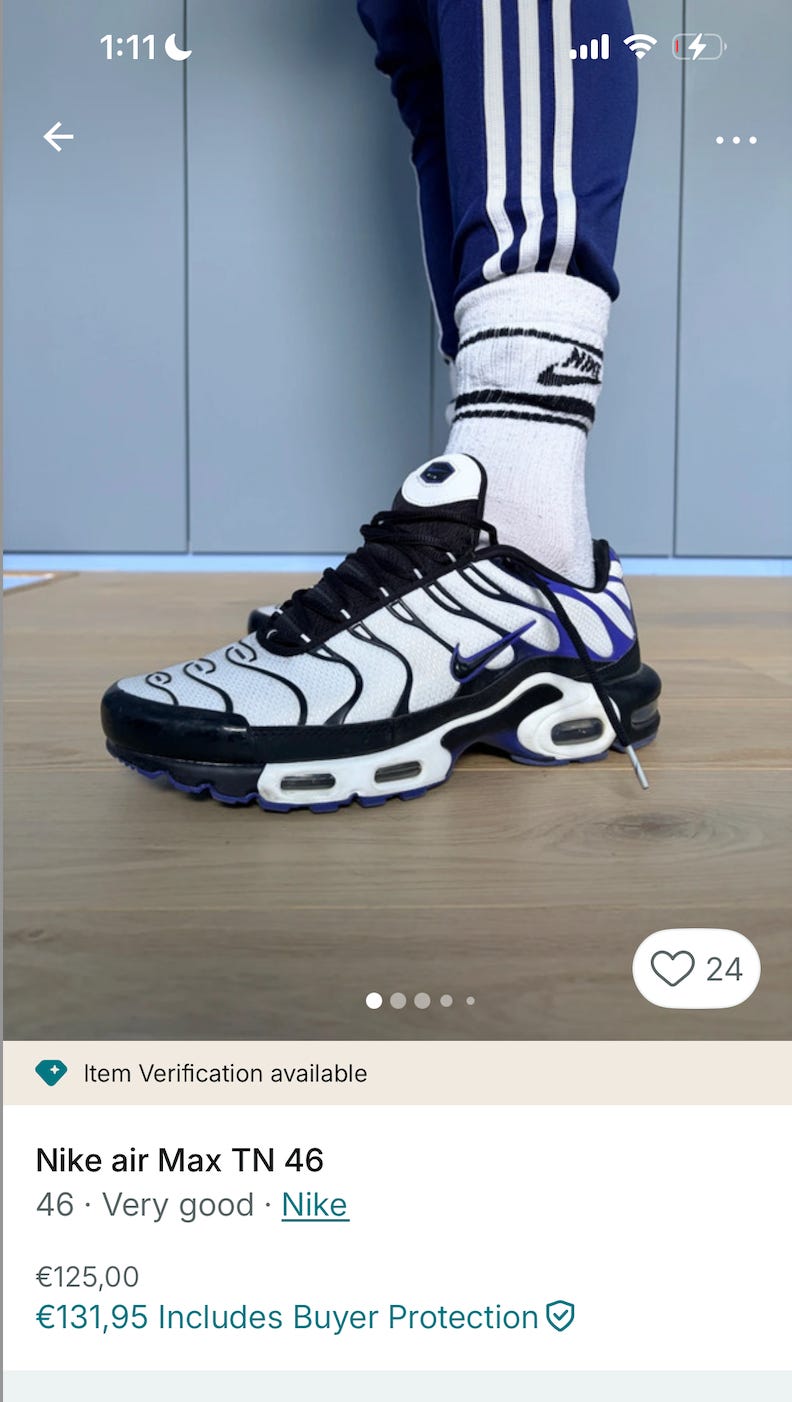
Hello, back in New York, workouts to resume this weekend. Health in America: no good $3 grocery store sandwiches, Coke isn’t made with sugar, but rather corn. But in both places everyone’s doing chest press. Reassuring. Two options: one, cry about structural health issues in America or two keep them in mind and ignore them as you elevate above. Then destroy them somehow. Workouts resume Sunday. Open Secrets the Snake Super Health esoteric health news index, covering all aspects of psychotic and normal health. Let’s begin.
What we cover: peptides, WHEY prices, protein powders and ditching them, SPRINTING, working out all the time but not being a meathead; gelatin/sugar, linoleic-acid avoidance (good HAIR), two-kiwi-a-day diets, off cuts/eye of round/tip (marinated), lemon, ginger, honey and water in a nutribullet, high-sugar coffee, skincare as diet (Vit. E/lycopene/sat. fat/X-factors), nicotine patches (not for me), nerve flossing AKA reverse Tai Chi aka high-level band work aka TOE WORK; juggling; ankle strength at the expense of bicep strength; thoracic spine strength, lower back mobility (super strength), outdoors, the great outdoors; life sans Rx; post-DHT/bloodflow hair growth, post-calories in/out, macros mastery, sunlight titration (no burn), red light/LED light—even helmets, Vonderplanitz/Peat/Verkhoshansky, Price, dead hangs, deep reading news coverage of obscure/basic fitness and dark wellness concepts, EMOM workouts (look it up), pleasant-looking zero-drop shoes, vibratory therapy (movement), cotton head to toe, strength, curly hair, German hangs, eye color lightening, red light, zinc maxing, carnivore and more. Where the obscure meets the basic and melds. Nobody who understands these topics writes about this. Snake Super Health Open Secrets.
Onto it:
Top story: Elizabeth Baron, a Bronx woman’s death from improper peptide administration, happened a couple weeks ago. Brutal news. Very quickly: 27-year-old Bronx woman was prescribed NAD+ (needle peptide; helps with recovery) at Bereshit Med Center (also in Bronx) and died in a hospital in that borough later. Ensuing coverage has been limited exclusively to local news—and then, mostly TV. There’s been a response by the Medical Spa association, a business group, but not much else. It’s brutal. The news might be subject of more encompassing magazine journalism later, but part of me wonders if this story is getting ignored because it’s a woman in the Bronx.
I think this was a freak occurrence—there’s talk about the doctor having bad paperwork—and not part of peptide treatment, but it illustrates, if not the danger, then the sheer complexity of peptide use and its administration. These are friggin’ needle drugs that aren’t regulated and which elicit complex, novel chemical reactions in people’s bodies. They are brand new to pretty much every single practitioner, except a handful. Very few doctors have more than a decade’s worth experience in these things. These peptides’ results—real, for sure; they work—are tied to this. Because they are novel, they’re working. But to me this is like getting Lasik in the ‘90s. Would you? You have to super know what you’re doing to wade in this world. This said, I frankly think most peptides, even those off WhatsApp, are roughly safe. The question is what’s most, and what does safe mean? There is lots of slack in the system for bad actors, probably too much. Is it safe enough for normal, busy individuals? Maybe just ones with lots and lots of cash who can glom onto health’s new idea; less so for Baron. Rest in peace.
First heard about NAD+ four years ago on Noah Ryan’s Substack; wrote about it a few years ago in a gift guide. Now we got memes on this running page.
Longevity science is cope
Late to this, but an excellent, thorough look by the New Yorker regarding the.. issue with “blue zone” or longevity research. AKA medical studies codifying the health habits of very, very old people; centennarians, 105-plus. The problem is there is no paperwork on many of these folks. They aren’t that old. It’s all a big scam.
Massive story, I think, since Blue Zone defined health pre-vibe shift and, in many ways, still defines it now. We forget about the mediterranean wine quinoa walking diet as many of us have evolved into protein powders, post-animal diets, Peat, lifting heavy, but the people funding studies (and running magazines and publishing books) believe in this stuff. They’re older, they’re educated, and have power to define the centre of these discussions.
Quickly: blue zones are the dozen-ish roughly poor, untouched places on the planet where an inordinate amount of individuals lived to very old age. The argument, originally in journalism and then in medical research, is these folks’ idiosyncratic lifestyles and diets—olive oil, wine, fish, hikes, caloric restriction—were what made so many people live to very, very old age. The term was popularized about 20 years ago after a National Geographic story. Ultimately, though, they’re not crazy outliers but just regular lying old people. Money quote:
The case of Okinawa, a group of relatively poor islands in the south of Japan, is instructive. Among Japanese prefectures, Okinawa ranks first in consumption of KFC and last in consumption of seafood, sweet potatoes, and leafy greens—its residents have Japan’s highest average body-mass index. More than a third of Okinawan men smoke. Although some books about blue zones encourage people to drink two glasses of red wine a day, “preferably Sardinian Cannonau”—a recommendation plainly at odds with current public-health advice—Okinawans like beer. If we want to live a long time, should we do as the Okinawans do?
Probably not. In 2010, Okinawa reportedly had twice as many centenarians per capita as the rest of the country. But, as Poulain himself has pointed out, Okinawa was the site of a devastating American bombing campaign during the Second World War; much of its infrastructure and essentially all its civil records were destroyed. U.S. authorities reconstructed the civil registry by asking survivors to report their age, a process complicated by language barriers and a traditional Japanese calendar that differed from the Gregorian. The country’s postwar welfare system distributed some benefits based on age, and many Okinawans requested that their records be updated. There is a strong correlation between the number of requests made in a village and the supposed life span of its residents.
So good.
Couple notes. No mention of the “longevity gene” here—the one apparently evident in many of these geezers. The argument around this gene, APOE2, was its incidence creates centenarians. It’s separate, roughly from other health markers. You (roughly) either have the gene or you don’t, and if you don’t, all the good habits in the world won’t push you to 110. It’s not that simple… but it’s not in the piece.
Also wild the reporter from the original Nat Geo story trademarked the term, went on to do public speaking. I mean, salute, this is America.
The explanation here is: Cope. Well-heeled individuals needing a complicated, expert-defined, bourgeois explanation for health, needing an allusion to scholarship to make a decision, and wanting not only to be healthy, but to live to 110. It is not healthy to offload decision making to doctors and magazine editors reverse-engineering a trademarked term off of a couple dozen random freaks from across the world. It is not natural to fetishize selected groups of individuals who happen to be a dozen years older than the healthy people, here and there, across the planet. Someone somewhere is always going to be the oldest one. Just not good enough.
Finally
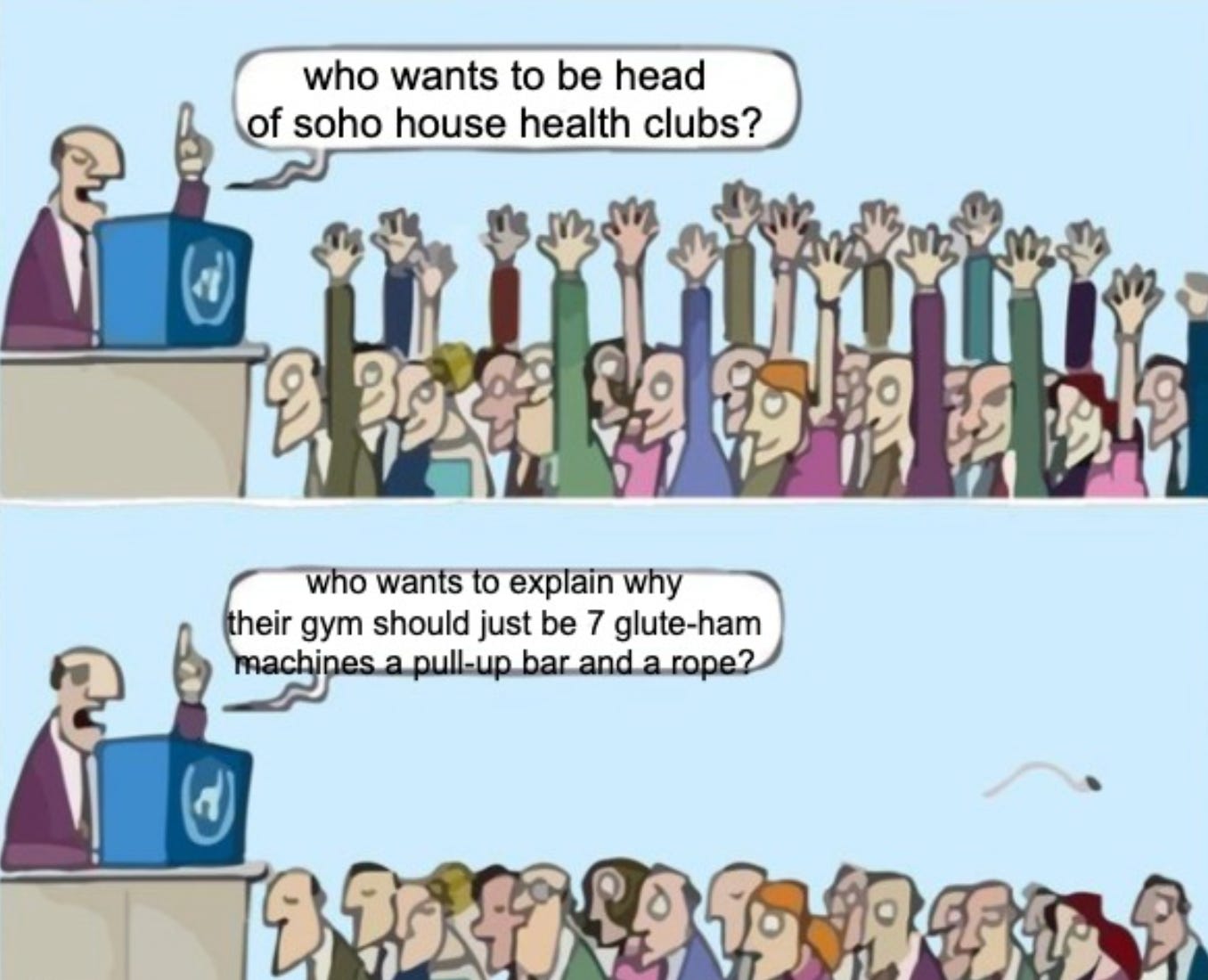
SoHo House is hiring a head of health club, shout out S.P.A. for the tip. Turning clubs—job description says seven gyms, so the Americas—into more serious gyms, or upgrading the gyms, perhaps… along with whole reimaginings of their health enterprises.
Fascinating. Needs to happen. Massive white space in the industry; spas are eating gyms’ lunch as third spaces. Not many great, beautiful, functional, luxury gyms out there, either. They exist, just not in America. People keep coming close, but not close enough. There are like five.
They should use deadstock 1980s Nautilus equipment. That’d be crazy.
Acquisition
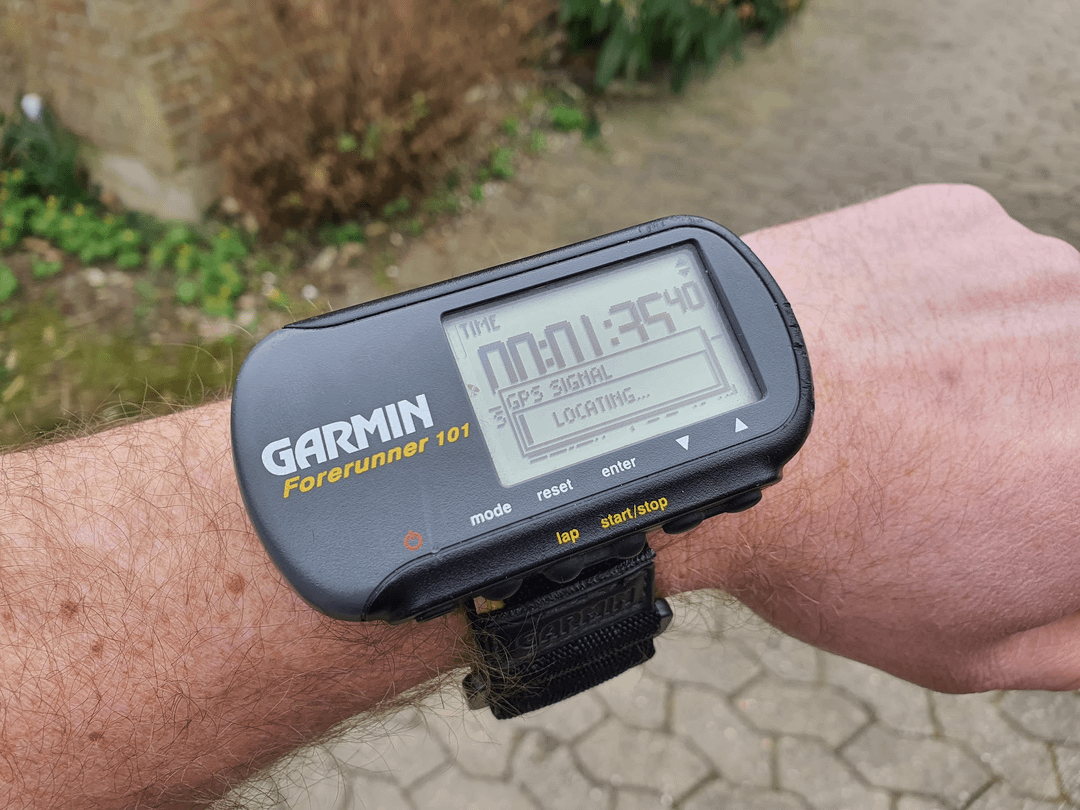
Strava-world news: Garmin just bought TrainingPeaks and TrainHeroic, two subscription-based training libraries/software systems, for an undisclosed sum. Little information on specifics; this post was best I found.
Effectively: Garmin, a GPS/fitness tech company—hiker watches—Peaks is used by marathoners, triathletes, Heroic by lifters but mostly personal trainers. Peaks’ annual sub isn’t cheap; TH has some decent a la carte programs*, but many good programmers have left to their own apps.
Scuttlebutt is Garmin’s own training system (Tacx) wasn’t the best; marathoners/triathletes I talked to tended to stick with TriDot for training. I say often here that nutrition and health is simple—it is—but programming… is not at first. It requires literacy, fluency, nuance… if you don’t know how it works, and want results, you need to pay. Smart.
*Programming here roughly means workout or training plans. A program to, say, put on muscle, or get in shape for a 5K, or marathon, or 100 mile bike race, or to get to 20 pull-ups. While you can get very far without programs, they’re decent ways to build a fitness practice if you’re a person with responsibilities who wants to get somewhere quick.

It’s been a year for Daily Reps Guy; you might have seen him; I’ve linked to him a couple of times in the exercise library. He’s an Instagram influencer who, as a lark, committed to working out 20 minutes a day—strength work: bodyweight stuff, some weights—every day, counter to the complicated programming discussed above, and using a spartan gym set-up. Link is a progress pic; he’s become pretty ripped, looks almost movie star. But his mustache bums me out so I’m not inserting it at proper size.
It’s remarkable progress and, with the data he published, though self-selected, has created a true archive. Every workout rundown, lots of information on nutrition, progress over weeks and months. As well as insight into sleep, supplements, etc.
The experiment runs along the idea of what I want this newsletter to be: you figure out health’s main movers, become literate, and create enough progress so you can either go deeper (become a health freak) or leave it humming in the background to allow time for other things. From a distance it’s very impressive that these results came from a minimal time commitment and a primitive, bare bones way of working out—but then so did Matt Damon’s in the Odyssey.
But it also seems too good to be true. It’s only an hour and change of lifting a week. Is that enough?
Yeah, it is, because of a few details. Below is how it’s done and how to replicate it for different goals:
